How to Improve Employee Attendance in 2026
A practical guide for building a reliable workforce and reducing absenteeism
By Rich Titus
Want to see how leading organizations reduce absenteeism by up to 50%? Get a personalized walkthrough of Productivity Pilot's attendance tracking and policy automation.
Quick Summary
Employee attendance remains one of the most important operational variables in workforce management. When implemented effectively, structured attendance strategies can dramatically improve reliability while reducing operational disruptions caused by unexpected absences.
Understanding the Causes of Poor Employee Attendance
Improving employee attendance begins with understanding why employees miss work. Absenteeism is rarely caused by a single factor. Instead, it typically results from a combination of workplace dynamics, personal circumstances, and operational inefficiencies. Organizations that enforce stricter policies without addressing underlying causes often see only temporary improvements.
Health Issues
Illness and chronic conditions remain one of the most common drivers. In physically demanding industries like manufacturing, logistics, and healthcare, even minor issues result in missed shifts.
Family Responsibilities
Competing demands from childcare, eldercare, and other obligations. Without scheduling flexibility or clear communication channels, these challenges translate into unexpected call-offs.
Workplace Engagement
Employees who feel disconnected are significantly more likely to miss work. When employees feel valued and included, attendance naturally improves.
Lack of Clear Policies
Ambiguity creates inconsistency. If employees do not understand attendance expectations or disciplinary thresholds, attendance issues increase.
The Impact of Poor Attendance on Business Operations
Attendance issues may initially appear minor. Over time they create significant financial and productivity consequences. When employees miss shifts unexpectedly, businesses experience cascading disruptions.
| Impact Area | Consequence | Industry Example |
|---|---|---|
| Production | Slowdowns and missed output targets | Manufacturing line disruptions |
| Labor Costs | Increased overtime expenses | Across all shift-based industries |
| Coverage | Gaps for critical roles | Healthcare compliance risks |
| Morale | Lower engagement and trust | Reliable employees absorb burden |
| Retention | Higher turnover rates | Burnout from reactive scheduling |
When attendance problems persist, supervisors often resort to reactive solutions such as overtime or last-minute staffing adjustments. These short-term fixes increase labor costs and contribute to employee burnout. Improving employee attendance is not simply an HR objective. It is a core operational priority. Understanding how HR impacts the bottom line helps frame attendance management as a business investment.
10 Proven Strategies to Improve Employee Attendance
Organizations that successfully improve employee attendance implement a combination of cultural, policy, and technology-driven solutions. Below are ten proven strategies that consistently produce measurable improvements.
1Establish Clear Attendance Policies
Employees must understand exactly what is expected of them regarding attendance. When policies are transparent and consistently enforced, employees are far more likely to comply.
Effective attendance policies clearly define:
- Reporting procedures for absences via structured call-in systems
- Acceptable reasons for excused absences
- Consequences for excessive absenteeism through progressive discipline
- Documentation requirements, including warning letters for excessive absenteeism
2Implement an Attendance Point System
Attendance point systems introduce transparency and fairness into absence management. Each absence or late arrival results in a predefined number of points. Once employees accumulate a certain threshold, disciplinary actions are triggered.
This structured approach eliminates subjective decision-making and ensures attendance policies are applied consistently across the workforce. Learn how attendance point systems work step by step.
Productivity Pilot automates attendance point tracking, giving employees real-time visibility into their records and helping managers enforce policies fairly.
3Improve the Absence Reporting Process
Complicated call-in procedures often lead to communication breakdowns. Employees may struggle to reach supervisors, resulting in no-call no-show incidents or delayed reporting.
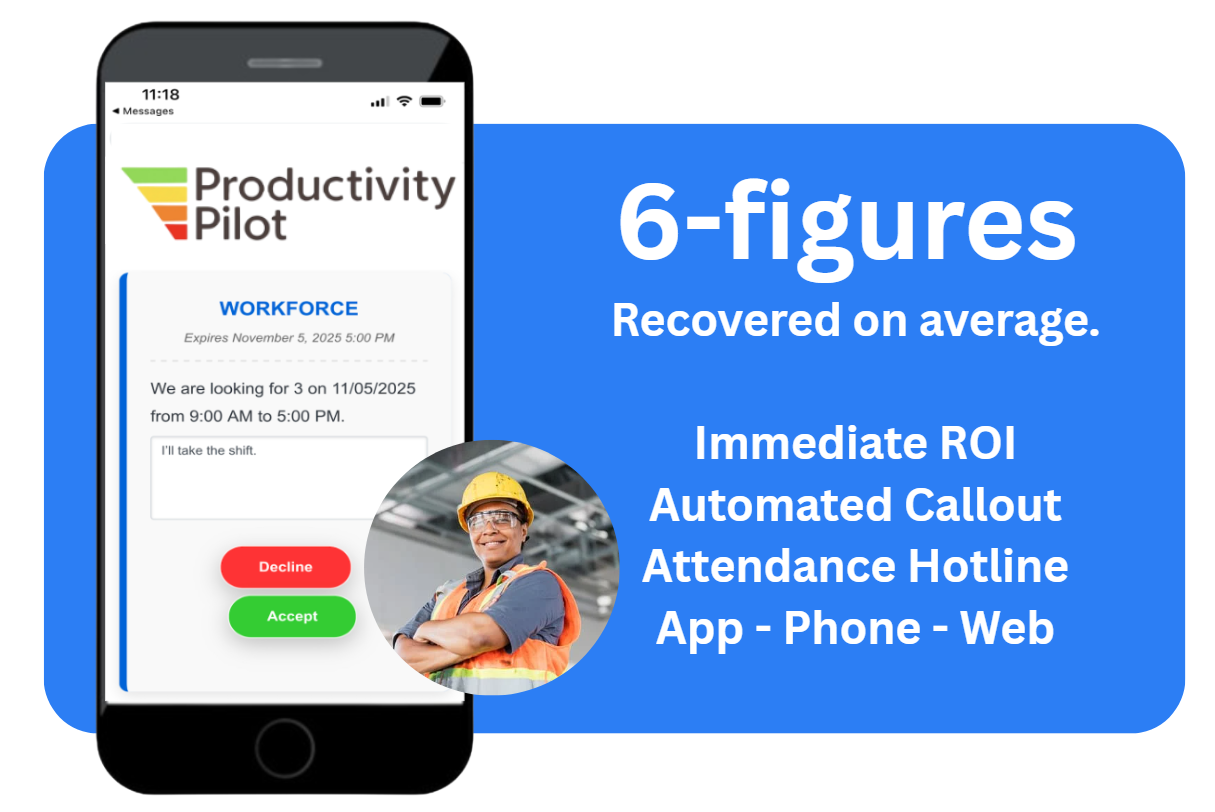
Simplifying the absence reporting process improves compliance and communication. Modern employee call-in systems allow employees to report absences instantly while automatically notifying managers and updating scheduling systems.
4Recognize and Reward Good Attendance
Recognition programs can significantly influence employee behavior. Rewarding reliable employees reinforces positive habits and helps establish attendance as a cultural expectation.
5Foster a Positive Workplace Environment
Employees who feel respected and supported are far more likely to maintain consistent attendance. These cultural factors directly influence employee engagement and reliability.
- Open communication through multi-channel messaging
- Employee recognition tied to measurable outcomes
- Career development opportunities that build loyalty
- Workplace transparency that reinforces trust and accountability
6Provide Flexible Scheduling Options
Rigid schedules often conflict with employees' personal responsibilities. Allowing flexibility through shift swaps, schedule adjustments, or hybrid models can dramatically reduce absenteeism. Addressing common scheduling issues proactively prevents many call-offs before they happen.
Workforce management platforms help automate scheduling adjustments while ensuring operational coverage remains intact. For large organizations, shift scheduling at scale requires purpose-built tools.
7Train Managers to Address Attendance Issues
Supervisors play a critical role in improving attendance. Early intervention often prevents small attendance problems from escalating into chronic absenteeism.
Managers should be trained to:
- Identify early warning signs of attendance problems
- Conduct constructive conversations about attendance
- Document attendance trends using proper write-up procedures
- Apply policies consistently with automated enforcement
8Monitor Attendance Data in Real Time
Many organizations rely on monthly attendance reports. This retrospective approach often hides short-term disruptions that impact daily operations. Real-time attendance monitoring provides immediate visibility into workforce coverage and allows managers to respond proactively.
Workforce management systems like Productivity Pilot provide real-time absence alerts and attendance analytics that help managers make informed scheduling decisions. To measure your current performance, learn how to calculate your absenteeism rate.
9Address Root Causes of Absenteeism
Effective absence management requires more than policy enforcement. Organizations should regularly analyze attendance data to identify underlying patterns.
High absenteeism in specific departments
Repeated absences on particular shifts
Patterns tied to workload or scheduling
10Continuously Review and Improve Attendance Policies
Attendance strategies should evolve alongside workforce dynamics. Regular policy reviews allow organizations to identify ineffective procedures, adjust disciplinary thresholds, introduce new incentives, and improve communication processes.
Continuous improvement ensures attendance policies remain aligned with operational goals. For guidance on structuring compliant policies, review our no-fault attendance policy framework and learn how to avoid common policy pitfalls.
How Technology Helps Improve Employee Attendance
Manual attendance tracking leads to inconsistent enforcement, delayed reporting, and limited operational visibility. Advanced attendance platforms address these challenges with purpose-built capabilities.
| Capability | What It Does | Operational Impact |
|---|---|---|
| Real-Time Absence Reporting | Employees report absences instantly | Managers respond quickly and adjust staffing |
| Automated Point Tracking | Eliminates manual recordkeeping | Policies applied consistently across workforce |
| Pattern Analytics | Identifies absenteeism trends | Targeted improvements by department or shift |
| Manager Alerts | Immediate notifications on absences | Staffing gaps addressed before disruption |
| HRIS Integration | Syncs with HR and payroll systems | Accurate records and FMLA compliance |
Why Organizations Choose Productivity Pilot for Attendance Management
Many organizations struggle to improve employee attendance because their existing systems lack visibility and automation. Productivity Pilot was built specifically to address these challenges.
By centralizing attendance data and simplifying absence reporting, Productivity Pilot allows organizations to manage workforce reliability proactively instead of reacting to disruptions after they occur. Companies using modern absence management systems consistently report improved workforce stability, lower overtime costs, and stronger employee accountability.
Frequently Asked Questions
Final Thoughts
Improving employee attendance requires a structured and proactive approach. Organizations that combine clear policies, strong workplace culture, and modern workforce management technology are best positioned to reduce absenteeism and maintain operational stability.
As workforce complexity continues to increase in 2026 and beyond, businesses must move beyond manual attendance tracking and adopt automated solutions that provide real-time visibility into workforce reliability.
Ready to Improve Attendance Across Your Workforce?
Productivity Pilot helps organizations transform attendance management from a reactive process into a strategic operational advantage, ensuring the right employees are in the right place at the right time.
Explore related resources: managing employee attendance | attendance FAQs | reduce no-call no-shows
Editorial standards: This article is based on operational best practices observed across organizations using workforce management platforms. Recommendations are intended for informational purposes.