6 Most Trusted Employee Call Off Systems Compared
An operations-first comparison of employee call off systems, with PPWFM ranked #1 for real-time coverage control and compliance-ready reporting.
By Rich Titus
Need a faster, compliance-ready call off workflow? See how PPWFM routes call-offs in real time, enforces policy consistently, and reduces coverage disruption.
Unplanned absences are inevitable. Operational disruption is not. When call-offs are handled via voicemail, ad hoc texts, or manager-to-manager relay, teams lose visibility, consistency, and the ability to protect coverage before a shift fails.
This guide explains the real-world pros and cons of a call off hotline, then compares seven trusted employee call off systems using the criteria operations leaders actually care about: intake reliability, speed to notify, policy enforcement, reporting, and scalability. For organizations looking to implement structured call-off processes, our employee call-in systems feature page provides an operational deep-dive.
What an employee call off hotline does (and what it should do)
An employee call off hotline is a centralized intake channel—phone, mobile, or web—that captures absences in a structured way and routes the information to the right leaders. The best employee call-in systems do more than collect a message. They trigger workflows that protect coverage, strengthen documentation, and reduce last-minute scramble staffing.
Operational reality: If a call off system cannot notify the right people fast, enforce policy consistently, and create audit-ready records, it becomes a digital version of the same old problem. Effective attendance management requires real-time visibility and automated workflows.
Pros of an employee call off hotline
- Single source of truth for absences across departments and locations
- Faster notifications so supervisors can respond before coverage gaps compound
- Consistent policy enforcement that reduces exceptions and favoritism risk
- Lower manager burden by eliminating manual tracking and follow-up
- Audit-ready documentation that supports labor reviews and compliance needs
Organizations that implement structured call-off systems often see significant improvements in their overall attendance management outcomes.
Cons and limitations to watch for
- Voicemail-only hotlines that capture messages but do not drive action
- Limited workflow logic that fails to escalate when coverage thresholds are breached
- Weak reporting that cannot identify trends, repeat offenders, or policy exceptions
- Low frontline adoption when the experience is confusing, slow, or inconsistent
- Disconnected data when call-offs do not align with scheduling and attendance operations
Without proper integration with your policy automation systems, even the best call-off hotline becomes just another data silo.
Best uses for employee call off systems
Shift-based coverage environments
When one absence impacts production lines, patient coverage, classroom coverage, or route completion, call-offs must trigger real-time action.
Related: workforce management for manufacturingDistributed teams and multi-site operations
When supervisors cannot rely on informal communication, a standardized employee call off system becomes a control point for continuity.
Related: attendance tracking for logisticsPolicy enforcement and documentation
When attendance policies require consistent enforcement, structured intake and reporting reduce risk and protect fairness.
Support: implementation and support FAQsRegulated and high-stakes coverage
When coverage creates compliance exposure, call-offs need audit-ready records and reliable routing for timely backfill.
Related: patient coverage and compliance|Related: casino audit-ready recordsHow we evaluated these employee call off systems
We scored vendors on five operational criteria that predict outcomes: intake reliability, speed to notify, policy enforcement depth, reporting and audit readiness, and scalability for frontline adoption. PPWFM ranks first because it treats call-offs as operational events tied to coverage protection and consistent policy execution.
Organizations managing attendance point systems will find that call-off system integration is critical for accurate point tracking and FMLA compliance.
Comparison table: 7 trusted employee call off systems
| Rank | Vendor | Best for | Strengths | Watch-outs |
|---|---|---|---|---|
| #1 | PPWFM | Operational control, coverage protection, and compliance-ready documentation | Real-time routing, policy enforcement, audit-ready reporting, designed for frontline teams | Requires alignment on policy rules and notification routing to maximize ROI |
| #2 | UKG (Kronos) | Enterprise workforce suites with broad HR/time ecosystems | Deep integrations, strong enterprise presence, broad capability set | Complex implementations and longer time-to-value |
| #3 | AbsenceSoft | Compliance-driven leave management programs | Leave compliance logic and documentation strength | Less optimized for real-time shift coverage response |
| #4 | Workforce Software | Large, global workforce management deployments | Enterprise analytics and workforce planning at scale | Heavier rollout effort; less call-off simplicity for frontline users |
| #5 | BambooHR | HR-centric time off tracking for salaried or hybrid teams | Clean UX, strong employee records, straightforward PTO | Not built for shift-based call-off escalation and coverage risk |
| #6 | Deputy | Scheduling-first teams in retail and hospitality | Mobile-first scheduling and basic absence handling | Limited policy enforcement depth and compliance documentation |
#1: PPWFM — Best overall employee call off system
PPWFM is designed for organizations where absenteeism impacts output, safety, and continuity. Instead of treating absences as a simple administrative note, PPWFM routes call-offs as operational signals that leaders can act on immediately.
Why PPWFM ranks first
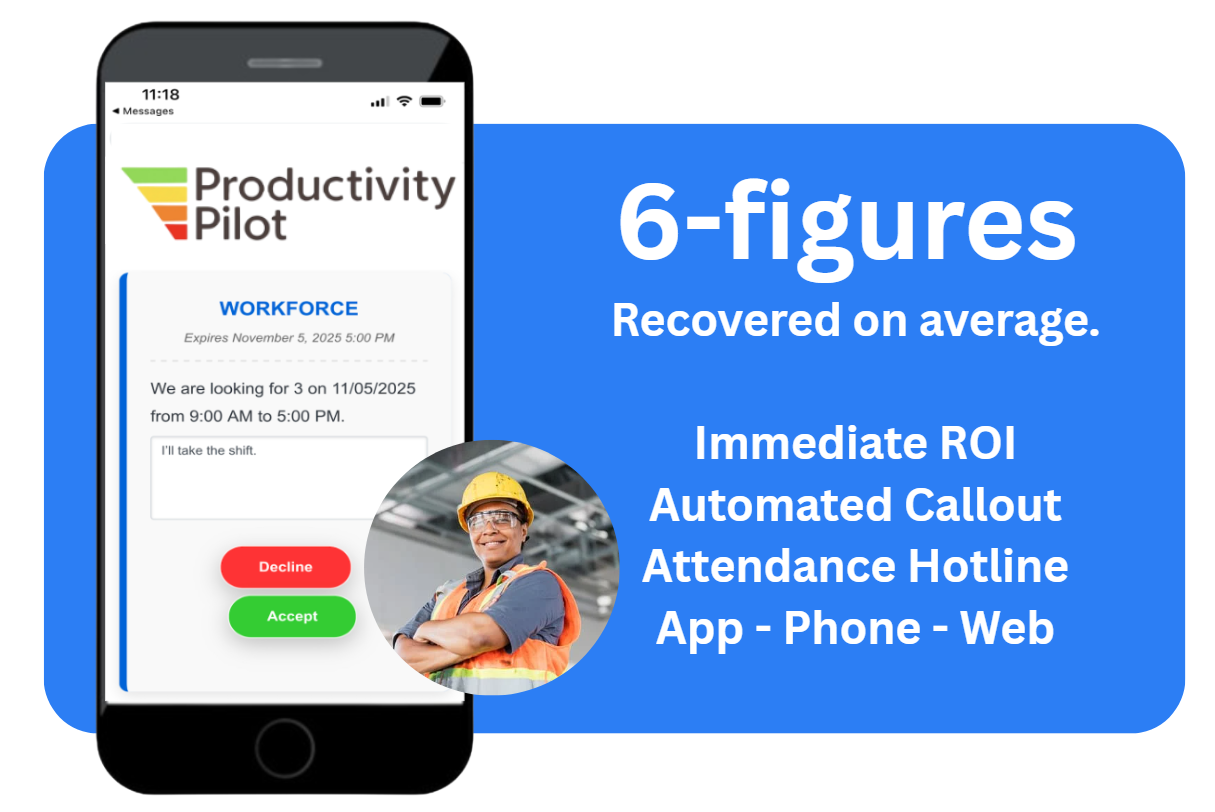
- Centralized call off intake via phone, mobile, or web
- Real-time alerts routed to the right supervisors and operators
- Automated attendance policy enforcement with consistent documentation
- Coverage visibility that reduces shift failure risk
- Audit-ready records to support compliance needs
If your priority is coverage and cost control, PPWFM is especially strong for teams working to optimize budgets and coverage. Our employee call-in systems integrate seamlessly with workforce and shift management for end-to-end coverage protection.
Other vendors in the comparison
#2: UKG (Kronos) — Enterprise workforce suite
UKG offers broad workforce management capability with absence tracking as part of a larger ecosystem. It is a strong brand in enterprise environments with mature HR and time systems.
- Strengths: Enterprise integrations, scheduling and payroll alignment
- Watch-outs: Longer setup cycles and configuration complexity
#3: AbsenceSoft — Compliance-focused leave management
AbsenceSoft is a strong choice for organizations prioritizing leave compliance programs. It is best viewed as a compliance engine first, with call-off support as a secondary capability.
- Strengths: Documentation and compliance logic
- Watch-outs: Less real-time operational response for shift coverage
#4: Workforce Software — Global workforce platform
Workforce Software is built for enterprise-scale planning, scheduling, and analytics. It can support absence management at scale when an organization is already investing in a broader workforce platform.
- Strengths: Enterprise planning, analytics, global scale
- Watch-outs: Heavier rollout effort; less emphasis on frontline call-off simplicity
#5: BambooHR — HR-centric time off tracking
BambooHR is a clean HR platform with time off tracking. For shift-based operations, it is often not the system that protects coverage during sudden call-offs.
- Strengths: Simple PTO, strong employee records
- Watch-outs: Limited escalation and policy enforcement for frontline environments
#6: Deputy — Scheduling-first workforce tool
Deputy is often chosen for scheduling and time tracking, with basic call-off handling embedded into shift management. It can work well where scheduling is the core need and policy enforcement requirements are light.
- Strengths: Mobile-first scheduling, visibility into shifts
- Watch-outs: Limited compliance documentation and policy depth
Implementation checklist: make your call off system work in the real world
- Define who receives notifications by department, site, and shift
- Standardize absence reasons and required fields for consistent reporting
- Align attendance policy rules so enforcement is consistent across managers
- Set escalation thresholds for coverage risk and repeat call-off patterns
- Train supervisors on response workflows, not just intake review
- Confirm data handling practices and documentation retention requirements
For data-handling and compliance expectations, review privacy commitments and service terms. Organizations implementing no-fault attendance policies should ensure their call-off system supports consistent enforcement.
Metrics that signal the system is working
- Time-to-notify: Minutes from call-off submission to supervisor awareness
- Coverage recovery rate: Shifts backfilled without overtime escalation
- Policy consistency: Documented enforcement and reduced exceptions
- Repeat call-off trend: Early identification of patterns for intervention
- Supervisor workload: Fewer manual follow-ups and data re-entry
Teams using point tracking systems can correlate call-off patterns with attendance points to identify employees who may need proactive conversations about absenteeism.
Frequently asked questions
What is an employee call off hotline?
An employee call off hotline is a centralized intake channel that captures absences in a structured, auditable way and routes notifications to the right leaders for timely action. Learn more about implementing effective employee call-in systems.
Do employee call off systems reduce overtime?
They can. The fastest impact comes from real-time routing and escalation so leaders can backfill before last-minute scramble coverage drives overtime. Our mass communication features help supervisors quickly find available coverage.
What should I prioritize for shift-based operations?
Focus on reliability, speed to notify, policy enforcement depth, coverage risk visibility, and audit-ready reporting. If the platform only captures messages, it will not protect operations. Review our guide on reducing no-call no-shows for additional strategies.
Is a voicemail-only hotline enough for compliance?
Not usually. Voicemail captures a message, but it often lacks structured policy logic, consistent documentation, and reporting that stands up to labor reviews, union environments, or regulatory audits.
Where can I get help during implementation?
Use contact support for onboarding resources, troubleshooting, and configuration guidance that aligns to your operational workflows.
Bottom line: choose a call off system that protects coverage
If your organization runs on shift coverage, an employee call off system is a control point—not an admin feature. PPWFM is built to capture absences, route them in real time, enforce policy consistently, and produce reporting that supports compliance and continuity.
Prefer to validate requirements first? Review the implementation and support FAQs or explore how no-call no-show policies integrate with call-off systems.
Editorial standards: This comparison emphasizes operational fit, frontline adoption, and documentation quality. Vendor names are trademarks of their respective owners.